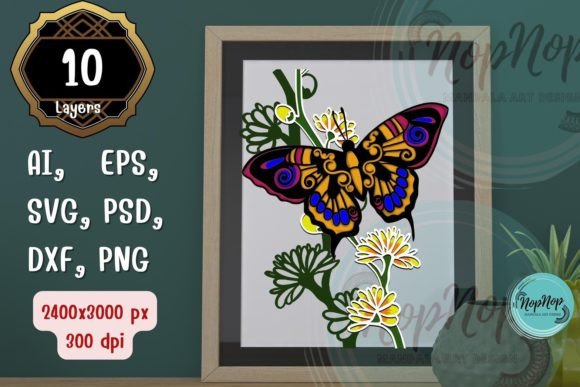
Review: 3D Flower and Butterfly V.01 for Real Projects
When I first opened the folder for 3D Flower and Butterfly V.01, my immediate reaction wasn't just about the visual appeal on the screen, but how those ten layers would translate into actual thread on fabric. As a designer who spends more time under the hoop than in front of a computer, I look for files that offer depth without becoming a stitching nightmare. This product, categorized under Shapes and delivered as a 3D SVG, promises a layered approach with five distinct layers for butterflies and five for flowers. That level of segmentation is exactly what experienced embroiderers need to control density and texture in a machine embroidery design.
First Impressions: Depth and Dimensionality
The layout of this embroidery file feels intentional. Unlike flat vector art that relies solely on color fills, the separation into ten specific layers suggests a build-up effect. When you visualize this as a finished product, you aren't just looking at a picture; you are looking at a topography of thread. The mood created here is whimsical yet structured. It fits perfectly into the current trend of dimensional decor and boutique apparel where customers expect more than just a logo slapped on a chest.
For an Etsy seller or a small shop owner, the visual personality of this design screams "handmade." It avoids the sterile look of mass-produced transfers. The interplay between the floral elements and the butterfly motifs creates a natural flow that guides the eye. However, the real test is always in the execution. A 3D SVG file gives us the flexibility to manipulate these shapes before they ever hit the machine, allowing us to adjust spacing or rotate elements to fit specific hoop size constraints.
Real-World Application: The Boutique Tote Scenario
Let's walk through a realistic scenario. Imagine a client orders a custom tote bag design for a spring market launch. They want something that feels premium but not overly heavy. This is where 3D Flower and Butterfly V.01 shines. Because the design is split into two main elements with multiple layers, I can choose to stitch only the flower layers for a subtle background texture, then overlay the butterfly layers for a pop of dimension.
On a canvas tote, the stitch density becomes a critical factor. If I were to stitch all ten layers in one go on a thin fabric, I might run into puckering issues. However, by treating this as a modular applique design or using a cut-away stabilizer, I can manage the bulk. The result is a bag that doesn't just hold groceries; it holds a conversation. Customers at a craft fair are drawn to texture. They want to touch the satin stitch borders and feel the raised fill stitch areas. This design facilitates that tactile experience, increasing the perceived value of the handmade product.
Beyond totes, consider sweatshirt embroidery. A crewneck sweatshirt provides a stable base for heavier designs. Placing this motif on the upper back or as a large chest piece could create a stunning statement piece. The layering allows for creative color play—perhaps using variegated thread colors in the flower petals while keeping the butterflies in a solid, contrasting hue. This versatility makes it a strong candidate for custom apparel lines that need to stand out in a crowded marketplace.
Navigating Technical Challenges
While the potential is high, we must be realistic about where this design requires caution. The complexity of ten layers means that stitch density will accumulate quickly. If you are working on a stretchy fabric like a jersey knit for baby embroidery, you must be vigilant. Without the right stabilizer, the weight of the thread could distort the garment after the first wash. I always recommend testing the design on scrap fabric of the same weight and weave before committing to a client's item.
Curved surfaces present another hurdle. If you plan to use this on a cap, the rigid structure helps, but the curvature can cause registration issues between the five flower layers and the five butterfly layers. You might find that the edges don't align perfectly if the fabric shifts even a millimeter. In such cases, simplifying the design by skipping intermediate layers or using a running stitch outline to define shapes rather than filling them completely might be a smarter move for durability.
Furthermore, consider the end-user's lifestyle. If this is intended for a kitchen towel or an apron that will see frequent washing and high heat, the dense areas of a 3D SVG design might trap moisture or fray over time. For items requiring heavy utility, I often advise reducing the layer count or switching to a less dense fill pattern. It is about balancing aesthetics with longevity. A beautiful holiday embroidery gift is useless if it falls apart by New Year's Day.
Enhancing Brand Value and Customer Trust
In the world of commercial embroidery, consistency is key. Using a well-structured file like 3D Flower and Butterfly V.01 helps maintain brand consistency across different products. Whether you are making a pillow cover for a nursery or a patch for a jacket, the design language remains recognizable. This recognition builds trust. When a customer sees high-quality stitching with clear definition and no loose threads, they associate that quality with your brand.
The visual appeal of this design also translates well into printable mockup assets. For digital product sellers, having a design that looks good in a flattened preview is essential for sales. The distinct layers allow you to create dynamic marketing images that show off the depth of the product even before it is stitched. This can significantly boost buyer engagement on platforms like Etsy or Shopify.
Practical Notes for the Studio
Before you start stitching, here are a few professional tips to ensure success with this file:
- Test on Scraps: Always run a test stitch-out on the actual fabric you intend to use. Check how the ten layers interact with the material's weave.
- Check Contrast: Review your thread colors in black and white mockups first. Ensure that the layers distinguish themselves clearly without relying solely on color differences.
- Stabilizer Selection: Given the multi-layer nature, a medium-to-heavy weight cut-away stabilizer is likely necessary to support the weight of the design, especially on garments.
- Hoop Verification: Confirm that your largest element fits within your available hoop size. You may need to split the design if working with smaller hoops.
- Licensing Check: Since this is a digital asset, always verify the license terms regarding commercial embroidery and the sale of finished goods versus digital redistribution.
Ultimately, 3D Flower and Butterfly V.01 is a versatile tool in the modern embroiderer's kit. It offers the structural complexity needed for high-end small shop products while remaining flexible enough for personal projects. By understanding its layering logic and respecting the limitations of your materials, you can turn this digital embroidery file into a tangible asset that drives sales and delights customers. Whether you are creating a personalized gift or building a catalog of design assets, this file rewards careful planning with a stunning finished product.