Eiffel Tower Couple Silhouette: 3D SVG for Cards And Invites
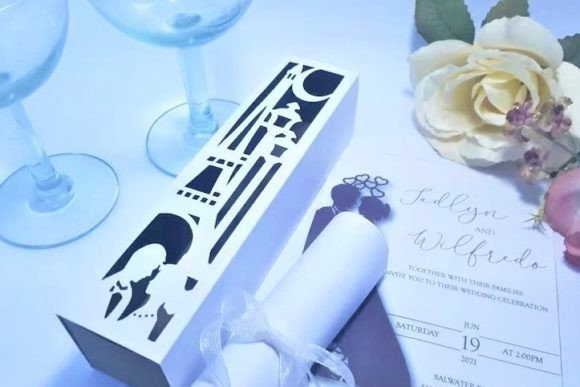
When a client approaches me with a vision for a Parisian-themed wedding or a romantic boutique launch, the pressure is on to deliver visuals that feel both timeless and unique. Recently, while scouting assets for a high-end invitation suite, I reviewed the Eiffel Tower and Couple Silhouette Wedding Invitation Box. As a designer who constantly evaluates graphic design assets for real-world application, my first impression was one of immediate atmospheric potential. This isn't just a clipart file; it is a mood setter. The silhouette of the couple against the iconic tower instantly evokes a sense of travel, romance, and sophistication, making it an ideal candidate for projects requiring a strong emotional hook.
The visual style here is clean yet detailed enough to stand out. In the realm of Cards And Invites, simplicity often wins, but this asset strikes a balance by offering a recognizable landmark without becoming cluttered. For a small business owner or a handmade brand looking to elevate their brand identity, this kind of imagery provides instant recognition. It fits perfectly into a narrative of "love in the city of lights," which is a powerful angle for marketing visuals, whether for a physical event or a digital campaign.
Integrating the Silhouette into Diverse Design Projects
The versatility of this 3D SVG file extends far beyond a single wedding invitation. In my workflow, I always ask: "Where else can this live?" For a comprehensive branding package, this illustration could easily transition into a logo design for a travel agency specializing in honeymoons or a local bakery launching a French-inspired pastry line. The clean lines work exceptionally well for product labels on perfume bottles or candle jars, where the silhouette adds a touch of elegance without overpowering the label text.
For those running an Etsy product shop or engaging in print-on-demand sales, this asset is a goldmine. Imagine this graphic centered on a tote bag, sublimated onto a ceramic mug, or used as a sticker design for wedding favor packaging. The scalability of the vector format ensures that whether it is printed on a large poster or a tiny thank-you card, the edges remain crisp. Content creators and bloggers can also leverage this for social media graphics, using it as a watermark or a decorative element in Pinterest pins to drive traffic to wedding planning guides or travel blogs.
Furthermore, for users of cutting machines like Cricut or Silhouette, this file serves as an excellent Cricut project base. It can be cut from cardstock for layered invitations, heat-pressed onto t-shirts for bridal parties, or used to create intricate printable wall art for nursery decor with a travel theme. The ability to manipulate the layers in a vector editor allows designers to separate the couple from the tower if needed, offering flexibility for custom Canva templates or complex packaging design structures.
Strategic Placement and Visual Hierarchy
Understanding where to place this asset is crucial for maintaining visual hierarchy. The Eiffel Tower and Couple Silhouette Wedding Invitation Box works best in large layout areas where it can serve as a hero graphic. It shines on the front cover of an invitation suite, as a focal point on a website landing page, or as the central image on a product mockup. In these contexts, it acts as a decorative accent that anchors the themed collection, guiding the viewer's eye immediately to the romantic narrative of the brand.
However, caution is required when integrating this into crowded layouts. Because silhouettes rely on negative space and distinct shapes, placing them over complex backgrounds or busy patterns can cause the details to get lost. It is less suitable for minimalist corporate branding where ultra-clean, abstract geometry is preferred, or for projects requiring very strict visual hierarchy where text legibility is the sole priority. In low-contrast designs, such as light gray on white, the subtle curves of the tower might disappear, reducing the overall impact.
Professional Designer Notes and Technical Review
Before approving any digital product for a client project, I run a series of practical tests. Here is how this asset holds up under professional scrutiny:
- Contrast Testing: Always test the silhouette in pure black and pure white. Ensure it maintains its shape and readability on both light and dark backgrounds. This is vital for commercial design where the asset might be used on various colored merchandise.
- Scalability Check: Preview the file at extremely small sizes (e.g., favicon scale) and large formats (e.g., banner scale). A good SVG design should not lose definition when scaled down, ensuring the couple's outline remains distinct.
- File Format Inspection: If the download includes PNGs, check the transparency thoroughly. There should be no halos around the edges. For the vector file, open it in your preferred editor to confirm that the paths are closed and editable, allowing for color changes or node adjustments.
- Typography Pairing: This romantic illustration pairs beautifully with script fonts and handwritten fonts, enhancing the personal feel. However, do not shy away from pairing it with a clean sans serif font for a modern twist, or a classic serif font for a more traditional, editorial look. Avoid overly decorative display fonts that might compete with the intricate details of the tower.
- Licensing Verification: Crucially, always confirm the commercial license terms. Since this is intended for client work, ensure you have the rights to use it in products for sale, such as sublimation designs or physical invitations, without attribution issues.
In conclusion, the Eiffel Tower and Couple Silhouette Wedding Invitation Box is a robust addition to any designer's library. Created by My3DPaper, it offers a unique and romantic aesthetic that goes beyond standard wedding tropes. Whether you are crafting a bespoke invitation suite, building a small business branding package, or creating content for a travel blog, this asset provides the polish and emotional resonance needed to make a project stand out. By understanding its strengths in modern design and respecting its limitations in complex layouts, designers can effectively harness this tool to create memorable, high-quality visual experiences.